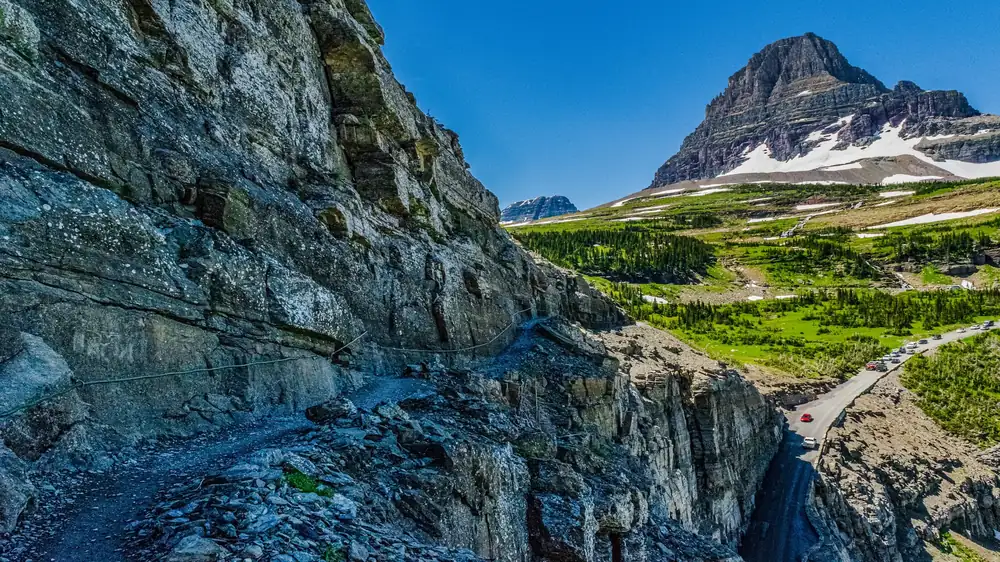
The Highline Trail in Glacier National Park is 15 miles roundtrip with an elevation gain of rougly 1,500 feet.(Photo: Jeffrey Ross/Getty Images)
Two hikers fell to their deaths in separate events at different popular wilderness areas in late August. The tragedies prompted rescuers to reiterate the importance of practicing safety on both technical and non-technical hiking trails.
After motor vehicle deaths and drownings, falls—usually while hiking—are theleading cause of accidental deathin U.S.National Parks. Incidents like these highlight the importance of both hiking within one’s physical limits and staying on established trails.
On August 27, a 73-year-old woman fell from theHighline Trailin Montana’sGlacier National Park, according to theNational Park Service. She was hiking with a large group between the Big Bend and Triple Arches formations when she stumbled and slipped off the side of the path, out of sight of her companions. Rescuers found her body 450 feet below the edge of the trail.
The accident marks the second major accident involving a fall in Glacier this year. In July, three hikers in the park were rescued afterfalling into a gorge while trying to take a selfie, two of whom were revived with CPR.
Two days after the tragedy in Glacier National Park, a 24-year-old man fell 40 feet from the top of Whittleton Arch, a sandstone formation located in Kentucky’sRed River Gorge.
“While alert and oriented, it became readily apparent the patient’s condition was critical,” the responding outfit, Powell County Search and Rescue, posted onFacebook. Though the hiker was successfully evacuated to a local hospital, he later died from his injuries. Officials did not release the man’s identity.
The same unit responded on September 1 to another hiker who had fallen 15 feet at the base of a large sandstone formation known as Gray’s Arch. The hiker was safely evacuated after being found with “a laceration on his head, arm, and potentially a sprained ankle.”
The incidents prompted Powell County Search and Rescue to post a warning to hikers on its Facebook page.
“What may usually be a simple slip can be life-threatening when at height. Stay vigilant of the ground around you and be sure to always stay a safe distance from the edge!” the SAR team wrote.
In addition to proper planning and packing, the NPS notes in its “Hike Smart” tips that it’s crucial for hikers not to overestimate their abilities and experience level when embarking on outdoor adventures. Elevation and climate are just two factors that can dramatically change a hiking experience. A five-mile hike at sea level, for instance, is quite different from a five-mile hike at 9,000 feet.
When considering whether to venture into an area, NPSremindshikers to ask themselves the following questions:
• What is my experience level with hiking?Do I go hiking often or is this my first time hitting the trails? • How much equipment, food, and water (weight) can I comfortably carry in a backpack?How long can I carry a backpack with all the essentials? • Am I physically fit for the hike I would like to do?Have I practiced hiking up and down steep hills or am I more comfortable on flat, paved paths? • Have I ever hiked in this type of environment before?Environmental conditions such as temperature and humidity take time to get used to, especially if you live in a different environment from the park you are visiting. • Am I able to go to higher elevations?More effort is required to hike at higher elevations due to the reduced amount of oxygen available in the air. Remember that at 8,000 feet you are at risk of altitude illness, a potentially life-threatening condition. If you don’t know, ask your healthcare provider. • Am I hiking alone or do I plan to bring a friend?It is safer to hike with a companion, but if you prefer go solo, take extra measures to ensure that you are prepared since you will be traveling alone
The NPS also recommends setting a gentle pace to avoid exhaustion that could cause stumbles and falls. If you can’t talk to your companions while you’re hiking, you’re probably moving too fast.